
A daypack for a three-hour walk is not a scaled-down expedition pack, and treating it like one is how hikers end up carrying two kilos of harness for a bottle of water and a rain shell. The best daypacks for short hiking trips are judged on how quickly a hand finds a bottle, a layer or a snack without stopping, and on how little the bag itself weighs before anything goes into it. Everything else is a strap count.
Capacity is the first decision, and twenty litres is the sensible middle. Below that, a pack holds a shell, water and lunch and nothing more, which suits an afternoon. Above twenty-five litres, the bag starts behaving like an overnight pack and carries weight it never needs on a short loop. Match the volume to the longest trip in the plan, then check the empty weight, because a packable sack near four ounces and a framed daypack near two pounds solve different problems.
Access is where a thin daypack and a well-made one part company. A panel-opening bag lets the whole contents lie flat like a book, which is useful at a lunch stop and useless while walking. A front shove-it or stash pocket takes a shell in one motion, side bottle pockets mean water without stopping, and a top or hip pocket keeps keys and a phone where a hand expects them. Count how many of those a bag has, in that order, rather than how many zips it advertises.
Carry and weather finish it. A padded back panel and a sternum strap keep a loaded twenty-litre bag steady on a climb, while a packable sack with webbing straps is a spare that lives in a larger pack. A packable shell survives a shower but does not breathe like a panel pack, and a roll-top or fold-over closure keeps rain out better than a lid with gaps. Choose the shell and the harness for the weather the trip will actually meet.
Quick Picks
Best Overall: Osprey Daylite Plus, 20L — a 20L pack with a front shove-it pocket and two bottle sleeves
👉 Take the Osprey Daylite Plus home on Amazon
Best for Trail Days: Deuter Speed Lite 21 — a 21L pack with a front mesh stash pocket and a detachable waist belt
👉 Move fast with the Deuter Speed Lite on Amazon
Best Hydration Pick: CamelBak Arete 18 — a 1.5L Crux reservoir in a 12.3 oz pack with a removable reservoir
👉 Drink from the CamelBak Arete on Amazon
Best Packable: 4Monster Hiking Daypack, 16L — a 4 oz sack with a front zip pocket and two mesh side pockets
👉 Stash the 4Monster daypack on Amazon
Comparison Table
| Product Name | Best For | Price Range | Check Price on Amazon |
|---|---|---|---|
| Osprey Daylite Plus Commuter Backpack, 20L | One pack for trail and commute | Mid | See the Osprey Daylite Plus |
| Deuter Speed Lite 21, Alu-Greystone | Fast walking with light loads | Premium | View the Deuter Speed Lite |
| Columbia Tandem Trail 22L | A quick-stash roll-top | Mid | Check the Columbia Tandem Trail |
| CamelBak Arete 18 with 50oz Reservoir | Drinking without stopping | Mid | See the CamelBak Arete |
| WATERFLY Packable Backpack, 20L | A spare bag in a suitcase | Budget | View the WATERFLY 20L |
| 4Monster Hiking Daypack, 16L | A phone, snack and shell | Budget | Check the 4Monster 16L |
| SKYSPER LANTC20, 20L | Organised kit for a first trip | Budget | See the SKYSPER LANTC20 |
| Fjällräven High Coast Foldsack 24 | A light bag that looks good in town | Premium | View the High Coast Foldsack |
Buyer’s Guide
1. Start With Litres, Then Subtract
Twenty litres carries a shell, a litre of water, lunch and a warm layer with room to spare, which is why most daypacks for short trips sit between sixteen and twenty-two litres. Below sixteen litres the bag stops fitting a jacket once the water is in. Above twenty-five, the extra volume becomes an invitation to fill it, and a heavier bag changes how the day feels. Measure the kit on the floor once, then buy the volume that holds it rather than the volume that might hold more.
2. Count the Pockets You Will Actually Use
Three pockets earn their place on a short hike: a side sleeve a bottle slides into without stopping, a front stash that takes a shell in one motion, and a small top or hip pocket for keys, phone and a snack. Everything else is optional. A pack with eight compartments and no bottle pocket is worse on the trail than a simple sack with two mesh sleeves. Open the bag in the shop or on arrival and time how long it takes to reach water, then judge the rest.
3. Weigh the Harness Against the Load
A twenty-litre bag loaded with two litres of water weighs a little over two kilos, and that is light enough for simple webbing straps. Padded shoulder straps, a sternum strap and a firm back panel make a difference once the load passes about four kilos or the trail steepens. A waist belt helps only if it transfers weight, which most daypack belts do not. Spend the grams on the back panel rather than on a belt that is really a stabiliser.
4. Decide Whether the Bag Should Pack Away
A packable sack folds into its own pocket and lives in a suitcase or a larger pack for the day it is needed, and gives up harness comfort and abrasion resistance in return. A structured daypack carries better, protects gear better and takes years of abuse, at ten to twenty times the packed weight. Neither is a compromise if the job is clear. Buy the packable as a second bag and the structured pack as the one that goes on every walk.
One Mistake to Avoid: Buying a Commuter Pack and Calling It a Hiking Pack
The most common mistake is choosing a bag on looks and laptop capacity, then discovering on the trail that the bottle pockets are too shallow, the front pocket has no stretch and the back panel traps sweat. A commuter pack is built for a train seat, and a hiking daypack is built for movement, weather and a hand that needs a bottle without stopping. Check the bottle sleeves, the back panel and the closure before the colourway, and accept a plainer bag that works.
Best Daypacks for Short Hiking Trips: 8 Lightweight Options for Casual Hikers Who Want Easy Gear Access
These eight packs run from a 4 oz packable sack to a 1.29 lb structured daypack, and the spread is deliberate, because a two-hour local loop and a wet six-hour ridge walk do not ask the same thing of a bag. Each entry leads with the capacity, weight, closure and pocket count published for the product, then says where the design stops working. The order follows the list supplied for this round, so read it as a comparison rather than a ranking. Where a page contradicts itself or leaves a figure out, that gap is stated instead of filled in.
1. Osprey Daylite Plus Commuter Backpack, Black, 20L
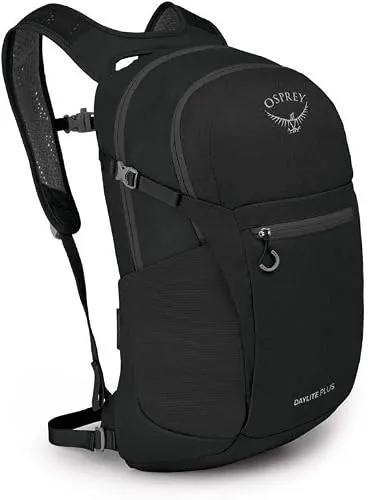
Best for: A hiker who wants one pack for the trail, the commute and a weekend away without buying twice.
- 20L Capacity: A single size with room for a shell, lunch, a litre of water and a warm layer.
- 1.29 lb: The listed item weight, light for a structured pack with a padded back panel.
- 18.9 x 11 x 9.4 in: The listed dimensions, a tall shape that sits close to the back.
- Fits a 14 in Laptop: A padded sleeve that takes a 14-inch device, which is why the bag doubles as a commuter.
- 3 Access Points: A front shove-it pocket and two side bottle sleeves, all reachable without opening the main bag.
Pros:
- The shove-it pocket swallows a shell without opening the main bag.
- The back panel and straps carry a full day’s kit without sagging.
- It moves from trail to town without looking like expedition gear.
Cons:
- The laptop sleeve takes space that a hiking-only bag would give to a layer.
- The single 20L size leaves no option to add volume for a winter kit.
- The shell is a tight fit once a camera and a flask go in.
Choose the Osprey Daylite Plus on Amazon
2. Deuter Speed Lite 21L Hiking Lightweight Backpack, Alu-Greystone
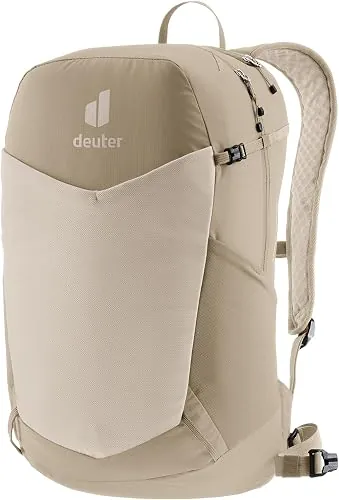
Best for: A walker who moves fast with a light load and wants a pack built for movement rather than errands.
- 21L Capacity, 46 x 28 x 18 cm: The listed volume and dimensions, sized for a fast day out.
- 2 Stretch Side Pockets: Sleeves for bottles, plus a front stretch mesh pocket for gloves or a shell.
- 1 Removable Waist Belt: A belt that comes off when the load is light and stays on when it is not.
- 2L Hydration Compatible: A sleeve that takes a 2-litre reservoir, with the hose routed over the shoulder.
- 100% Recycled Body Fabric: A bluesign-certified shell made entirely from recycled material.
Pros:
- The V-shaped cut keeps the pack still when the pace picks up.
- The mesh front pocket takes wet gloves without soaking the main load.
- The glasses stow system on the shoulder strap is a nice touch for sunny days.
Cons:
- The harness is built for light loads and feels thin past about five kilos.
- The single top pocket has no organiser, so small items collect at the bottom.
- The removable belt leaves the hip padding behind when it comes off.
Strap on the Deuter Speed Lite on Amazon
3. Columbia Tandem Trail 22L Backpack, Collegiate Navy/Stone Green

Best for: A casual hiker who wants a roll-top pack with a separate pouch for the things that come out most.
- 22L Capacity: The listed volume, one of the larger single-compartment bags in this group.
- Roll-Top Closure: A fold-and-clip mouth rather than a zip, which keeps rain out of the main bag.
- 1 External Quick-Stash Pouch: A front pouch for a shell, a map or a snack, separate from the main load.
- 2 Side Bottle Sleeves: Stretch sleeves that take a bottle without opening the main bag.
- 2 Trekking-Pole Attachments: Fixtures on the back for stowing poles when the trail turns to scrambling.
Pros:
- The roll-top seals the main load against rain without a cover.
- The separate front pouch keeps the essentials within reach while walking.
- The flat base lets the bag stand up when it is put down at a lunch stop.
Cons:
- The page gives more than one weight figure, so only a rounded claim can be made here.
- A roll-top has to be reopened fully to reach anything packed at the base.
- The single size and limited colour stock narrow the choice.
Load the Columbia Tandem Trail on Amazon
4. CamelBak Arete 18 Hydration Pack with 50oz Crux Reservoir, Mahogany
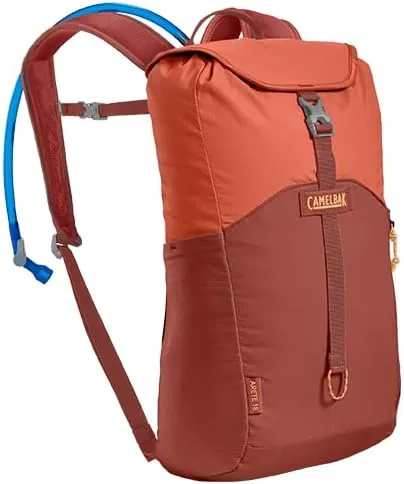
Best for: A hiker who would rather drink from a tube on the move than stop and swing a bottle out of a pocket.
- 1.5L Crux Reservoir: A 50 oz bladder included with the pack, enough water for two to three hours of steady walking.
- 12.3 oz: The listed item weight of the pack as sold.
- 3D Vent Mesh Harness: A ventilated harness built to keep air moving across the back.
- 1 Zippered Phone Pocket: A secure pocket for a phone, plus stretch side pockets for bottles or layers.
- Removable 1.5L Reservoir: The bladder lifts out, leaving space for a laptop or a day’s clothing.
Pros:
- Drinking from a tube keeps hands free and pace steady on a climb.
- The ventilated harness stays cooler than a flat padded panel.
- Without the bladder it works as a light day bag for travel.
Cons:
- Eighteen litres is tight once a warm layer and lunch go in.
- A bladder takes longer to fill, clean and dry than a bottle.
- The reservoir sleeve is the driest place in the bag when a hose leaks.
Fill the CamelBak Arete on Amazon
5. WATERFLY Small Lightweight Packable Backpack, 20L
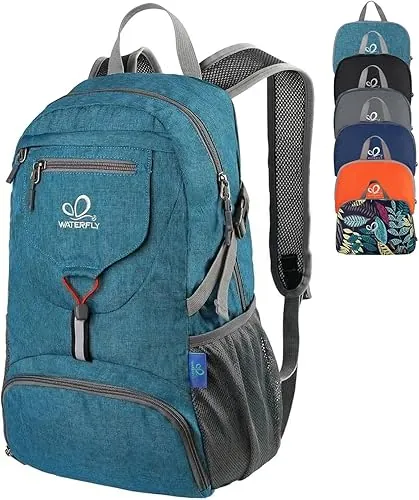
Best for: A traveller or a casual walker who wants a real 20 litres in a bag that folds into a suitcase.
- 20L Capacity: The full volume of the unfolded pack, enough for a day’s clothing plus water.
- 10.2 oz: The listed weight of the bag, foldable but not a bare-minimum sack.
- 8.7 x 6.3 in Folded: The packed size, small enough to live in a larger bag or a car door pocket.
- 3 Compartments: One main pocket, two front pockets and a removable zip pocket for small essentials.
- 16.9 x 11.4 x 5.5 in Unfolded: The listed dimensions, a boxy shape rather than a rounded mummy.
Pros:
- Ten ounces buys a bag that takes a full day’s kit and folds away after.
- The removable zip pocket keeps a phone and keys together.
- Recycled nylon and SBS zips hold up better than the price suggests.
Cons:
- The webbing straps have no padding and cut in once the bag is heavy.
- There is no back panel, so a full load sits flat against the spine.
- The thin shell will not survive being dragged over rock.
Pack the WATERFLY 20L on Amazon
6. 4Monster Hiking Daypack, A-Orange, 16L
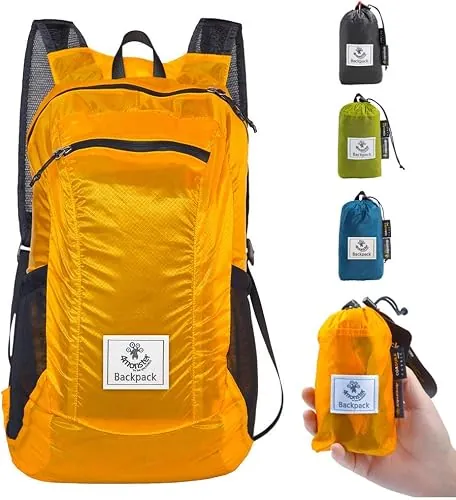
Best for: A short, low-load outing where the bag is a place for a phone, a snack, a shell and a bottle.
- 4 oz (113 g): The listed weight, light enough to forget it is in a pocket.
- 16L Capacity: Enough for a shell, lunch and a bottle on a short loop.
- 30D Nylon Shell: A tear-resistant fabric with reinforced stitching, listed as water-resistant.
- 3 Pockets: A main compartment, a front zip pocket and two mesh side pockets.
- 3 Sizes: 16L, 24L and 32L share the same packable construction.
Pros:
- At four ounces it can live in a larger pack as a spare without being noticed.
- Two mesh side pockets take bottles that many packables leave out.
- It folds to wallet size and unpacks without creasing.
Cons:
- Four ounces of nylon carries weight badly once the bag passes about three kilos.
- The shell sheds light rain and soaks through in steady weather.
- The straps are flat webbing with no padding at all.
Fold the 4Monster daypack on Amazon
7. SKYSPER Small Hiking Backpack, LANTC20, 20L
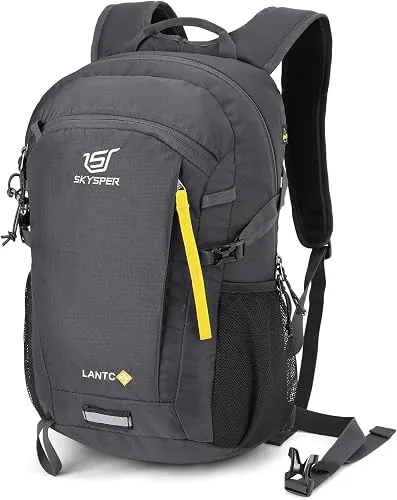
Best for: A newer hiker who wants an organised, breathable pack without spending much on it.
- 20L Capacity, 10.3 x 7.4 x 16.9 in: The listed volume and dimensions for the LANTC20.
- 1.1 lb: The listed weight, heavier than the packables and lighter than a framed daypack.
- 600D Polyester and 210D Nylon Plaid Shell: A two-fabric construction listed as water-resistant and tear-resistant.
- 2 Sizes: The LANTC20 comes in 20L and 30L, both with the same harness and pole fixtures.
- Pole Fixtures and a Whistle: Attachment points for trekking poles, an anti-theft zip and an emergency whistle on the harness.
Pros:
- The padded, grooved back panel and mesh keep air moving on warm climbs.
- Reinforced lap-knots at the stress points are a good sign for regular weekend use.
- Trekking pole fixtures and a whistle cover two purchases for a first kit.
Cons:
- At 1.1 lb the pack weighs as much as some bags ten litres larger.
- The anti-theft closure adds a step to every opening.
- The removable strap system takes a few trips to get adjusted well.
Organize the SKYSPER LANTC20 on Amazon
8. Fjällräven High Coast Foldsack 24 Backpack, Shark Grey

Best for: A light packer who wants a clean-looking 24L bag for short hikes and the journey home.
- 24L Capacity: The largest bag in this group, with room for layers, lunch and a camera.
- 1.01 lb Stated: The maker’s figure for the pack, though the product page carries no weight field, so it is not treated as a page spec.
- 100% Recycled Polyamide: A waterproof main fabric, with a base in Bergshell containing 31% recycled polyamide.
- Fold-Over Top with Zip and Metal Clasp: A closure that rolls or folds down and fastens with a clasp.
- 3 Pockets and Detachable Straps: A zipped front pocket, two side pockets, and chest and hip straps that come off.
Pros:
- The fold-over closure keeps rain out without a separate cover.
- The Bergshell base should outlast the lighter fabric above it.
- The detachable straps let it pass as a plain town bag.
Cons:
- There is no padding or structure, so heavy loads sit awkwardly.
- The fold-over closure means unpacking from the top every time.
- The single-size volume is more than a short afternoon needs.
Shoulder the High Coast Foldsack on Amazon
Frequently Asked Questions
Q1: What should I look for in the best daypacks for short hiking trips?
A: Start with capacity, since sixteen to twenty-two litres covers a shell, lunch, a litre of water and a warm layer for a half-day walk. Then check the empty weight against the harness, because a packable sack at four ounces and a structured pack at 1.29 lb carry very differently. Look at three pockets in particular: a side bottle sleeve, a front stash for a shell and a small pocket for keys and a phone. Finally, match the closure to the weather you expect.
Q2: Is 20 litres enough for a day hike?
A: Twenty litres is enough for most short hikes, carrying a waterproof shell, a warm mid layer, lunch, a litre of water and a small first aid kit with room to spare. It becomes tight if the plan includes a camera, a flask or a full change of clothes, and it is too small for a winter trip where bulkier insulation comes along. A twenty-litre bag also doubles as a commuter or travel pack, which is part of why the size is so common.
Q3: Are packable daypacks strong enough for real hikes?
A: A packable sack handles a short, light trip well and is the right choice as a spare that lives in a larger pack or a suitcase. What it does not do is carry weight comfortably, because the straps are flat webbing with no padding or structure, and the thin shell will not survive being dragged over rock. Keep the load under about three kilos, avoid abrasive surfaces, and treat it as a second bag rather than the only one.
Q4: Do I need a hydration reservoir or is a bottle enough?
A: A bottle is simpler to fill, clean and judge, and two side sleeves on a daypack make it easy to drink without stopping. A reservoir is easier to sip from on a climb, which matters when both hands are busy or the pace is steady. Bladders hold more and encourage regular drinking, but they hide how much is left and take longer to dry. Many hikers carry one bottle and a small flask rather than a bladder.
Q5: How much should a daypack weigh?
A: Under 1.5 lb is light for a structured daypack, and around 1 lb is very light for anything with padding and pockets. Packable sacks run from 4 oz to 10 oz and carry accordingly. The useful measure is the total on the trail rather than the empty figure, so weigh the loaded pack once at home. A 1.3 lb harness that carries five kilos well beats an 8 oz sack that cuts into the shoulders by the second mile.
Final Verdict
The right daypack depends on whether the bag is the only one in the car or a spare that lives in a suitcase. The Osprey Daylite Plus puts a shove-it pocket, two bottle sleeves and a padded back panel into 1.29 lb, the Deuter Speed Lite 21 is built for fast movement with a front mesh stash and a detachable belt, and the CamelBak Arete 18 carries 1.5 litres of water in a harness that breathes. The 4Monster weighs 4 oz, the WATERFLY 20L folds to pocket size at 10.2 oz, and the SKYSPER LANTC20 organises a first kit at 1.1 lb.
If you want the best daypacks for short hiking trips that keep water, a shell and a snack within reach without weighing you down, don’t overthink it—these are already:
✔ Every capacity, weight and pocket count is the figure published for the product
✔ Harness comfort is judged against the load each pack is built to carry
✔ Where a page contradicts itself on weight, the gap is stated rather than guessed
Best Overall – Osprey Daylite Plus Commuter Backpack, Black, 20L
Best for Trail Days – Deuter Speed Lite 21L Hiking Lightweight Backpack, Alu-Greystone
Best Hydration Pick – CamelBak Arete 18 Hydration Pack with 50oz Crux Reservoir, Mahogany
Best Packable – 4Monster Hiking Daypack, A-Orange, 16L