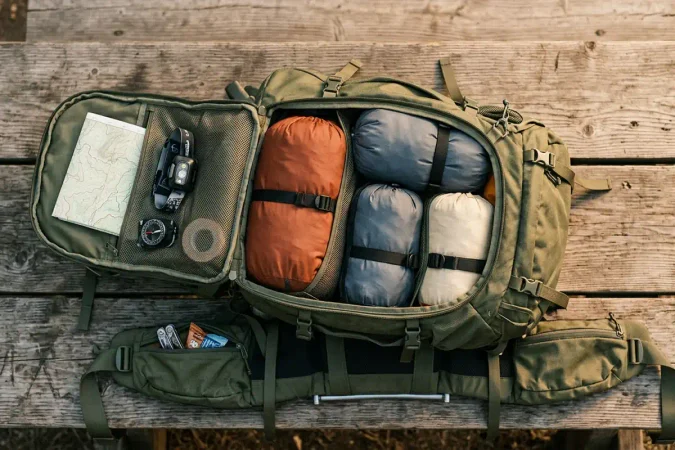
The heaviest thing most hikers ever carry is a pack that fits wrong. The best hiking backpacks for multi-day travel are engineered against exactly that — suspension systems that move weight onto the hips, harnesses that adjust to a torso instead of an average, and storage laid out so the gear you packed actually comes back out — because a load that fights its carrier collects its tax on every switchback.
The misconception is that capacity does the work. Multi-day hikers speaking from experience describe a different truth: past a long weekend, comfort comes from the frame, the hip belt, and the fit range, and organization comes from how the compartments think — not from how many liters the label advertises. A sixty-liter pack that carries like a competent partner beats a seventy-liter slog every trip out, and smart storage is the difference between camp setup and an archaeological dig.
That is why this field divides by suspension and access rather than size alone. Adjustable-torso platforms and articulated hip fins carry the load; U-zip openings, sleeping-bag compartments, and lid architecture organize it; and the premium houses wrap both in fits that tune to the individual hiker. The value lanes prove the same logic costs less than many assume.
Measured by those standards, the ten here span the full spread — premium suspension flags, proven mid-lane workhorses, and budget carries that still respect a spine.
Quick Picks
Best Overall: Osprey Aether 55L Men’s Backpacking Backpack — the adjustable-torque benchmark of the premium lane on a 4.7 record.
👉 Shoulder the Aether on Amazon
Best Budget: Mardingtop 60L Military Internal Frame Backpack — the board’s strongest branch rank at its floor ask.
👉 March the Mardingtop on Amazon
Best Load Support: Kelty Coyote 65L Internal Frame Backpack — a stated 30-to-55-pound carry window on a proven Fit-Pro chassis.
👉 Coyote up the Kelty on Amazon
Best Smart Storage: High Sierra Pathway 2.0 60L Backpack — multiple access points and pocketed hips for organizers.
👉 Pave the Pathway on Amazon
Comparison Table
| Product Name | Best For | Price Range | Check Price |
|---|---|---|---|
| Osprey Aether 55L Men’s Backpacking Backpack | Premium adjustable suspension | Premium | Check Price |
| Gregory Baltoro 65L Backpacking Pack | FreeFloat load carriage | Premium | Check Price |
| Deuter Aircontact Core 50+10L | Expandable premium frame | Premium | Check Price |
| Kelty Coyote 65L Internal Frame Backpack | Stated 30-to-55-pound window | Mid | Check Price |
| The North Face Terra 65 Backpack | Lid-system organization | Mid | Check Price |
| TETON 65L Explorer Internal Frame Backpack | Cover-included value carry | Mid | Check Price |
| High Sierra Pathway 2.0 60L Backpack | Multi-access organization | Mid | Check Price |
| Amazon Basics 75L Internal Frame Hiking Backpack | Big-volume entry lane | Budget | Check Price |
| Naturehike 65L Internal Frame Hiking Backpack | Lightweight value frame | Budget | Check Price |
| Mardingtop 60L Military Internal Frame Backpack | Tactical-grade value lane | Budget | Check Price |
Buyer’s Guide
Suspension is the whole comfort argument. A multi-day load lives or dies at the hip belt — a well-padded, correctly positioned fin pair transfers the weight off the shoulders and onto the body’s strongest carriage structure, while the frame keeps the transfer stable under movement. Look for adjustable torso geometry, a harness that tunes vertically, and a stated carry window that matches your real pack weight. Suspension that fits turns fifty pounds into a partner; suspension that does not turns twenty into a grudge.
Access layout decides how the pack lives in camp. Top-loaders reward disciplined packers with weatherproof simplicity; U-zip and panel openings let a hiker reach the middle of the load without excavating it; and a separate sleeping-bag compartment keeps the night kit exactly where the wet day kit is not. Lid systems add a summit-day pack by detaching, and pocketed hip belts move snacks and navigation to the hands-free zone. Match the layout to how you actually stop, camp, and move.
Capacity honesty beats capacity bragging. Multi-day loads for most trekkers land between fifty and sixty-five liters, and the packs that serve them longest pair honest volume with compression straps that shrink the bag when the load is light. Check the stated load ceilings and fabric weights, confirm rain coverage — integrated covers or an included fly — and weigh the empty pack, because every ounce of chassis is an ounce of gear displaced. The right liter count is the one your back stops noticing.
One Mistake to Avoid:
Buying the capacity before the fit. A seventy-liter monster with a fixed torso column presses its frame exactly where your spine does not want it, and no amount of volume fixes a harness that was never your size — the load migrates to the shoulders, the shoulders quit by afternoon, and the trip shrinks to match. Measure your torso, set the adjustment to it, and load the pack with real weight before committing. Fit is the feature that every other feature depends on.
10 Best Hiking Backpacks for Multi-Day Hikers Who Need Comfortable Load Support and Smart Storage
These ten split the multi-day field by suspension and access: the Osprey, Gregory, and Deuter carry the premium adjustable-suspension flag, the Kelty, Terra, TETON, and Pathway hold the proven mid lanes, the Amazon Basics and Naturehike anchor the value-frame tier, and the Mardingtop runs the tactical-grade value end.
1. Osprey Aether 55L Men’s Backpacking Backpack
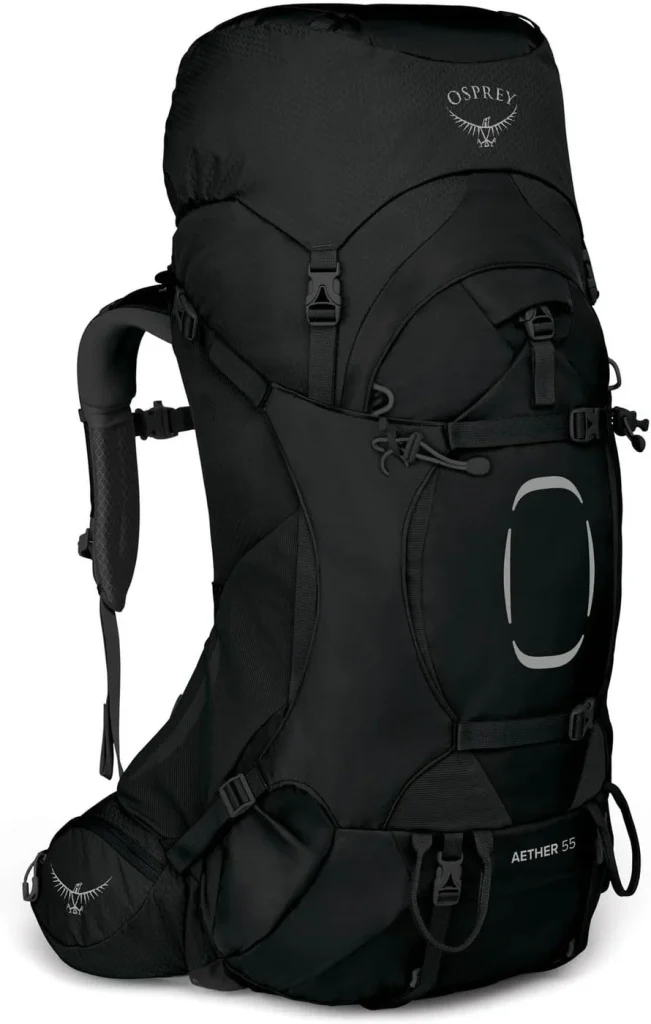
Best for: The premium adjustable-suspension benchmark.
- Fit-on-the-Fly harness: The torso and harness adjust on the move for a load that sits right all week.
- Raincover included: The stowed cover answers trailhead-to-summit weather without a separate buy.
- Sleeping-bag compartment: The lower bay keeps the night kit sealed away from the day’s mess.
- Top-band record: A 4.7 wearer verdict across 271 owners on the house’s flagship line.
- Publish-day stock gate: The page showed a low-count inventory line at verify — confirm before ordering.
- Ask at check: The live figure ran a step above its recent card ask — confirm the price at order time.
Pros:
- The suspension system this lane is judged by
- A 4.7 mark across a deep flagship record
- Cover and night-kit bays built into the design
Cons:
- Low-count inventory at the check
- The board’s ceiling ask
- Premium tuning exceeds casual-weekend needs
2. Gregory Baltoro 65L Backpacking Pack
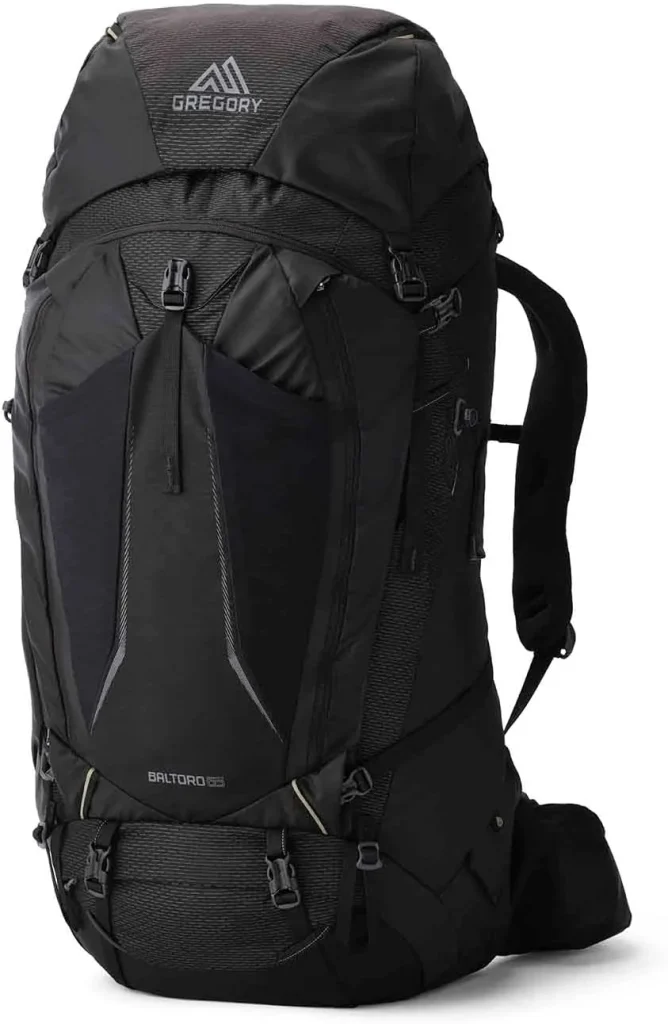
Best for: FreeFloat load carriage.
- FreeFloat A3 suspension: The articulated chassis lets the load pivot with your stride instead of against it.
- Adjustable torso: The harness tunes to the spine for multi-day carriage that stays honest past day five.
- Sixty-five-liter capacity: The bay swallows a full week without bulging past its own compression.
- Premium-house record: A 4.5 wearer verdict on the newest-listing lane here.
- Publish-day stock gate: The page showed a low-count inventory line at verify — confirm before ordering.
- Ask at check: The live figure sits above its recent typical — confirm the price at order time.
Pros:
- The most advanced suspension language on this board
- A week of volume on an adjustable frame
- Averaging a 4.5 on a fresh record
Cons:
- Low-count inventory at the check
- The board’s ceiling-adjacent ask
- Thirty-five owners — the youngest premium pool
Cruise with the Baltoro on Amazon
3. Deuter Aircontact Core 50+10L
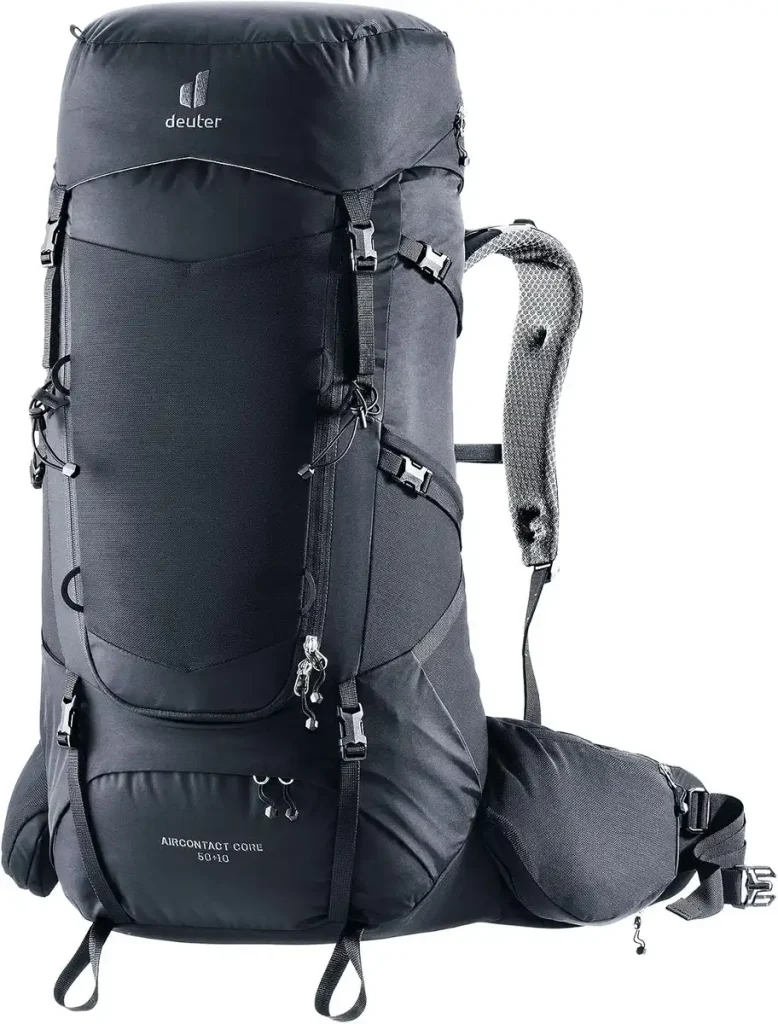
Best for: The expandable premium frame.
- Expandable 50+10L design: The collar adds a fifth of volume when the trip outgrows the plan.
- Aluminum Y-frame with VariFlex hip fins: The articulated belt tracks your hips while the frame carries the spine-side load.
- U-zip access plus gear loops: The front opening and attachment lattice handle full kit without the dig.
- Perfect-band record: A 5.0 wearer verdict — the board’s only flawless mark, on a five-owner seed pool.
- Publish-day stock gate: The page showed a two-pack count at verify — confirm before ordering.
- European house lineage: The carrying-system specialist’s multi-day platform.
Pros:
- The board’s only 5.0 band
- Expansion headroom for trip-length drift
- Hip fins that move with the stride
Cons:
- A two-pack count at the check
- Five owners — the seed-stage record
- The premium trio’s mid ask
4. Kelty Coyote 65L Internal Frame Backpack
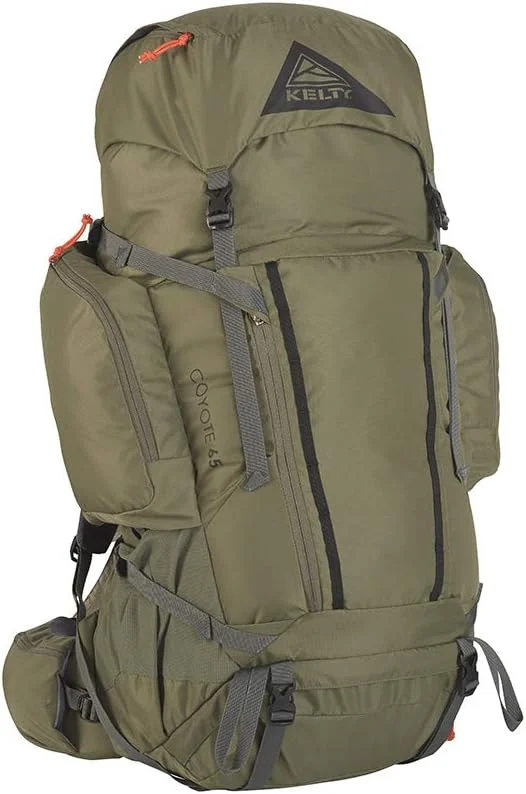
Best for: The stated 30-to-55-pound carry window.
- Fit-Pro torso adjustment: The harness tunes across a wide torso spread without tools.
- Perimeter frame with aluminum stay: The structure holds its geometry under a full week’s load.
- Stated 30-to-55-pound window: The carry range is published, so the match to your load is arithmetic, not hope.
- Sleeping-bag compartment and daisy chains: The night kit gets its own bay and the outside takes the extra gear.
- Proven lane: A 4.6 wearer verdict across 335 owners.
- Publish-day stock gate: The page showed a single-digit count at verify — confirm before ordering.
Pros:
- The clearest load-support contract on this board
- Three hundred owners behind the Coyote pattern
- Mid-lane ask on a heritage chassis
Cons:
- Single-digit inventory at the check
- Classic styling skips the modern vent trampoline
- Stock hip belt runs basic beside the premium fins
5. The North Face Terra 65 Backpack
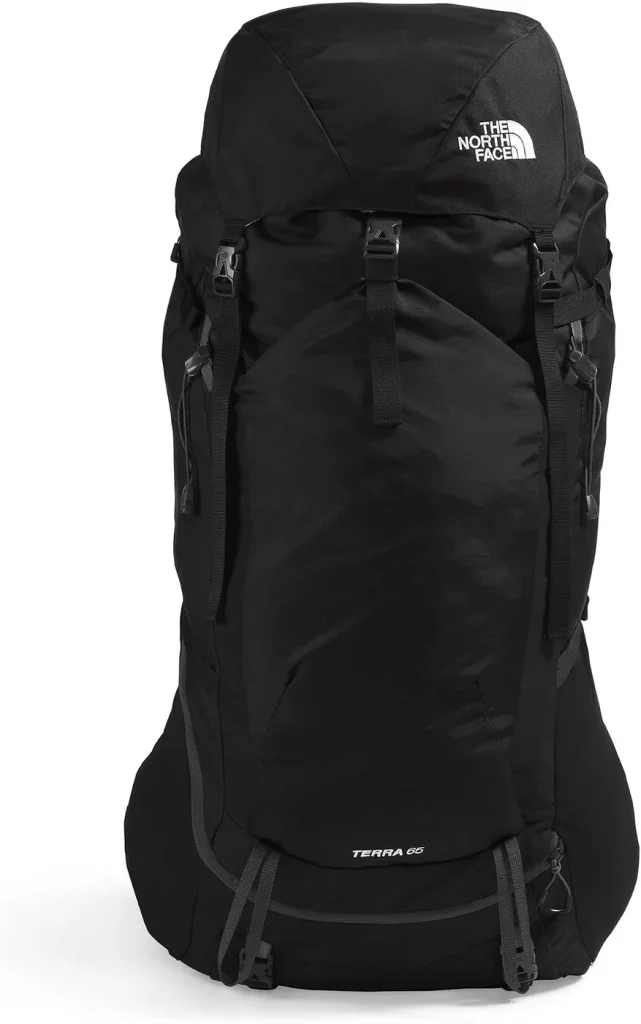
Best for: Lid-system organization.
- Removable lid: The top unit detaches into a summit-day pack — two bags in one chassis.
- Load lifters and adjustable thoracic carriage: The upper harness pulls the weight into the spine’s line.
- Full-length U-zip: The face opens the entire load for packing and mid-trip retrieval.
- Hipbelt pockets plus pole and ice-axe attachments: The small kit and technical tools ride at hand.
- Big-house record: A 4.2 wearer verdict across 36 owners on this sizing lane.
- Publish-day stock gate: The page showed a single pack at verify — confirm before ordering.
Pros:
- The cleanest two-bags-in-one play here
- Access architecture that opens the whole load
- The mid lane’s biggest house name
Cons:
- Single-pack inventory at the check
- The board’s lowest band at 4.2, stated plainly
- A young, small record on this sizing
6. TETON 65L Explorer Internal Frame Backpack
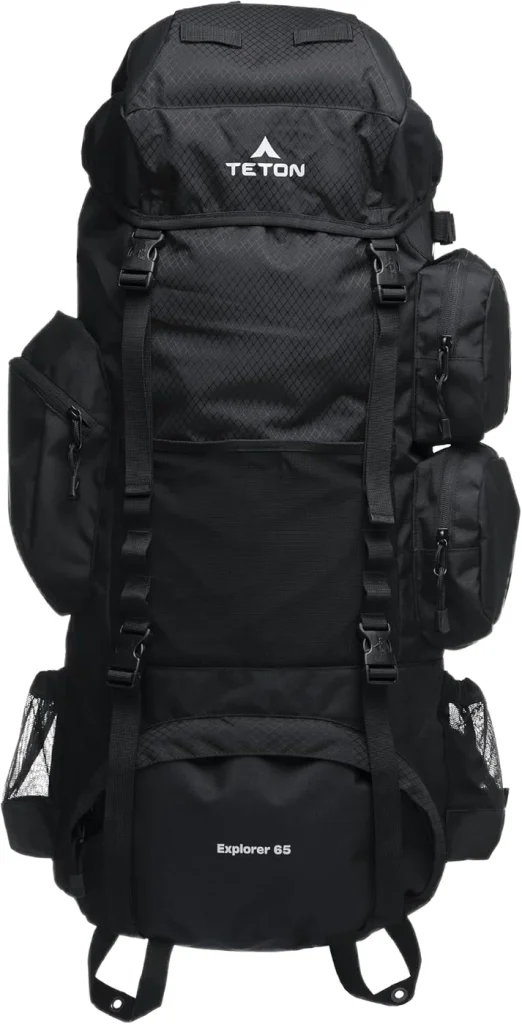
Best for: The cover-included value carry.
- Rain cover included: The stowed cover ships with the pack — storm duty is stock.
- Multi-position torso adjustment: The harness tunes across torso lengths for the value lane.
- Open-cell foam lumbar pad: The lower back rests against padding shaped for long approaches.
- Sleeping-bag compartment and compression straps: The night kit separates and the load shrinks when light.
- Family disclosure: A distinct product line from the maker’s other boards shipped on this chain — different pack, disclosed.
- Record: A 4.6 wearer verdict across 82 owners.
Pros:
- Cover, compartment, and compression at a value ask
- A strong 4.6 band on the mid tier
- Torso tuning the budget lanes skip
Cons:
- Live figure sits above its recent typical
- Low-count inventory at the check
- Ventilation runs warm in high heat
Roam with the Explorer on Amazon
7. High Sierra Pathway 2.0 60L Backpack
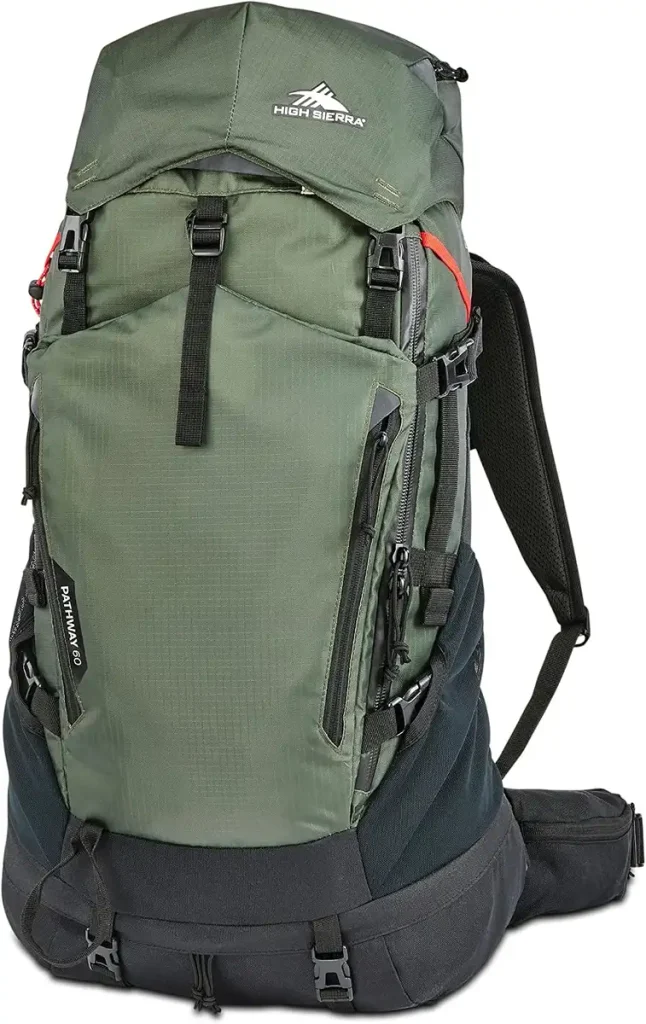
Best for: Multi-access organization.
- S/M/L adjustable back panel: The suspension sizes across three settings for a locked-in carry.
- Multiple access points: The bays open from more than one direction — the organizer’s answer to the dig.
- Padded hipbelt with storage pockets: The belt carries weight and the small kit at once.
- Hydration sleeve: The reservoir bay keeps water at the back on moving days.
- Publish-day stock gate: The page showed a single pack at verify — confirm before ordering.
- Record: A 4.4 wearer verdict across 175 owners.
Pros:
- The storage logic this board’s organizers want
- Three-position back panel at a mid ask
- A veteran house’s refined 2.0 platform
Cons:
- Single-pack inventory at the check
- Live figure stepped above its recent ask
- Mid band on the record
8. Amazon Basics 75L Internal Frame Hiking Backpack
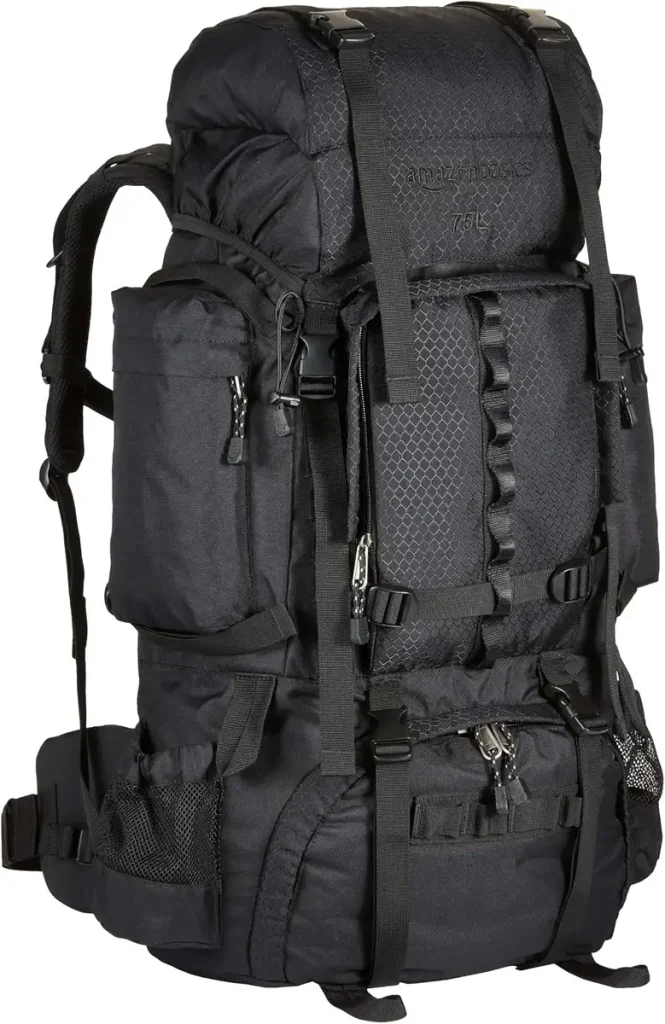
Best for: The big-volume entry lane.
- Seventy-five-liter capacity: The board’s biggest bay carries base-camp-scale loads.
- Included rainfly: The stowed cover answers weather at the value lane’s friendliest ask.
- Adjustable straps: The harness tunes to the torso across the entry tier.
- Branch headliner rank: A #4,248 hold in the house brand category with a hundred-plus moving monthly.
- Chain-return disclosure: This exact listing shipped on the chain’s original backpacks board — back on its record.
- Deep proven pool: A 4.4 wearer verdict across 2,648 owners.
Pros:
- The biggest volume at the board’s low end
- Two and a half thousand owners behind the pattern
- Rainfly included at the entry ask
Cons:
- Low-count inventory at the check
- Volume outgrows the suspension on hard loads
- Basic organization past the main bays
9. Naturehike 65L Internal Frame Hiking Backpack
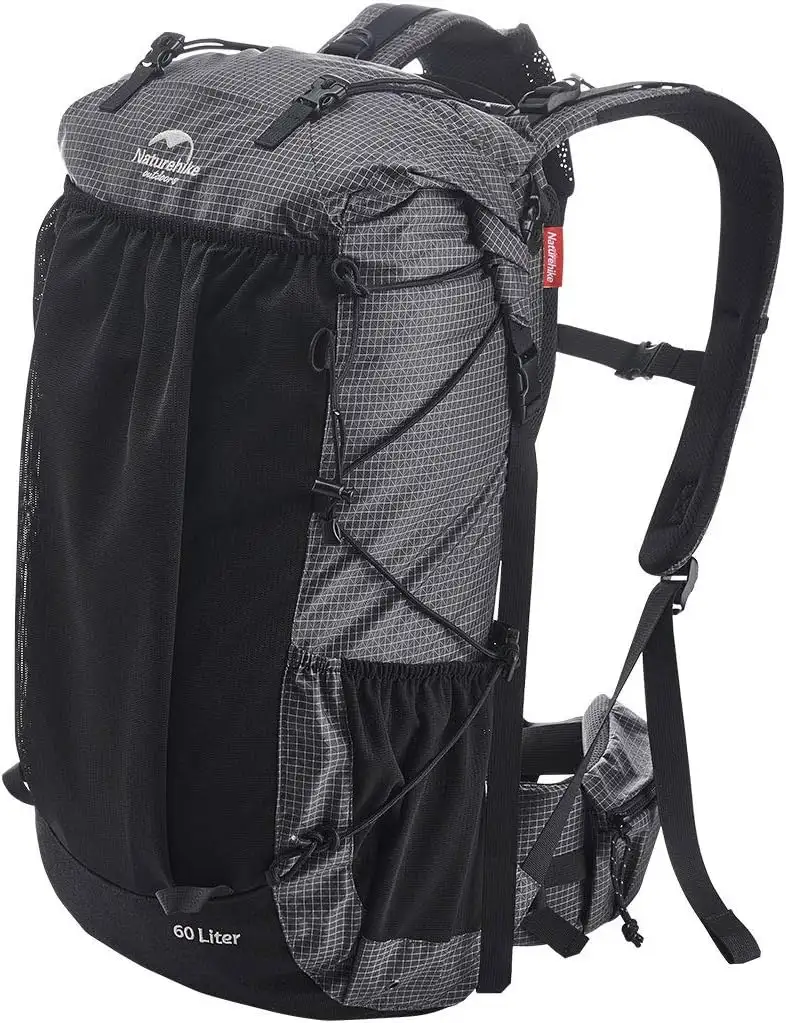
Best for: The lightweight value frame.
- Rain cover and hydration function: The stowed cover and reservoir bay ship stock.
- Stated 15-kilogram load ceiling: The carry limit is published — match your load before you commit.
- Compression straps: The frame cinches the load tight when the bay runs light.
- Lightweight-for-size build: The stated design keeps the sixty-five-liter lane moving fast.
- Deal lane: The live ask ran well under its typical figure at verify — confirm the current price at order time.
- Record: A 4.4 wearer verdict across 431 owners.
Pros:
- The lightest full-frame carry of this board
- Cover and hydration included at a value ask
- A published load ceiling instead of guesswork
Cons:
- Sub-typical deal pricing moves without notice
- The load ceiling caps expedition-scale carries
- Mid band on the record
Glide with the Naturehike on Amazon
10. Mardingtop 60L Military Internal Frame Backpack
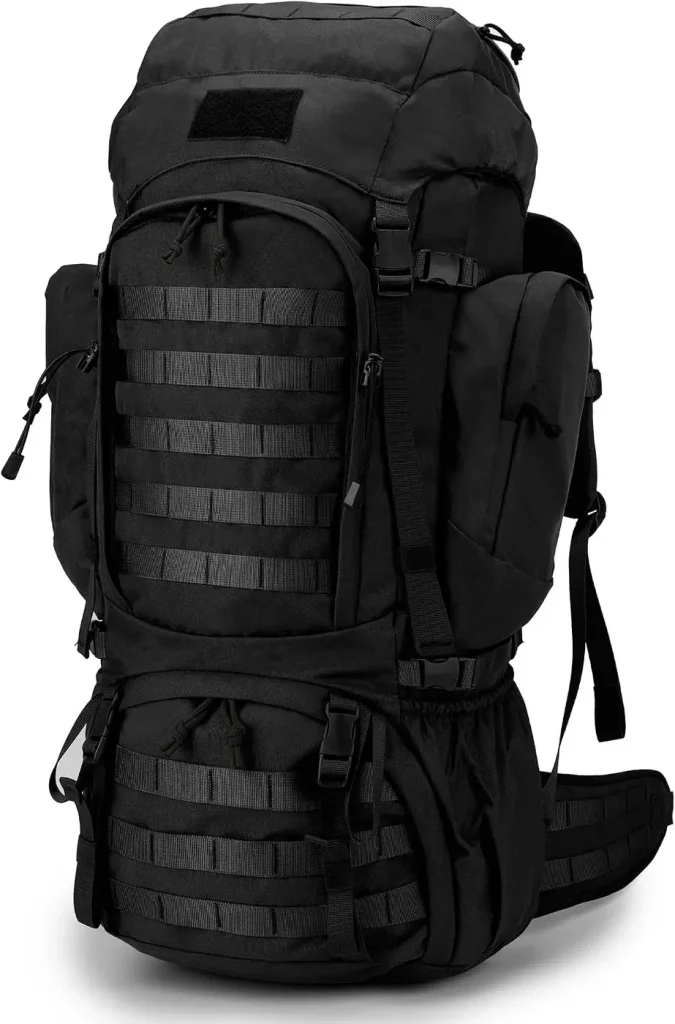
Best for: The tactical-grade value lane.
- Included rain cover: The stowed cover ships stock on the value lane.
- 600D polyester shell: The stated fabric spec takes the abrasion a load lane dishes out.
- Sleeping-bag and hydration compartments: The night kit and the reservoir each get dedicated bays.
- MOLLE webbing: The lattice expands the load for multi-day configurations.
- Board-best placement: A #14,070 hold on Sports and Outdoors — the strongest rank of this board.
- Record: A 4.6 wearer verdict across 990 owners.
Pros:
- The strongest branch rank of this whole board
- The floor ask with a 4.6 record behind it
- MOLLE expansion for growing load plans
Cons:
- Single-pack inventory at the check
- Tactical look divides trail-town taste
- Harness padding runs basic under max loads
Fall in the Mardingtop on Amazon
Frequently Asked Questions
Q1: What size backpack do I actually need for a multi-day hike?
A1: Most trekkers run best between fifty and sixty-five liters — enough for a sleeping kit, shelter, clothing, and food without room to hoard. Overnight-and-back trips fit comfortably near fifty, weeklong self-supported loads push toward sixty-five, and anything larger usually means carrying comfort instead of capability. Size the bag to the longest trip you actually plan, then let compression straps handle the short ones.
Q2: How much should a loaded multi-day pack weigh?
A2: The working rule is a loaded pack at or under twenty percent of body weight, which for most hikers means twenty-five to thirty-five pounds of total load. The stated carry windows on quality packs — one lane here publishes a 30-to-55-pound range — exist because suspension has honest limits past which comfort collapses. Weigh your packed bag once; the number changes how you pack forever.
Q3: Where should the weight sit in a backpacking pack?
A3: Heavy items belong close to the spine and between the shoulder blades, slightly above the lumbar pad — dense gear like water, fuel, and food rides there, bulky light gear fills the bottom and sides. The result is a load that pivots with your hips instead of levering backward. Pack once for the drive and once for the trail; the second arrangement is the one that matters.
Q4: Are adjustable-torso packs really worth it?
A4: For anything past a night out, yes — torso length varies independent of height, and a fixed frame that misses by two inches converts every pound into shoulder pain. Adjustable systems, present on most of this board, let the harness sit exactly where your iliac crest and scapulae demand. It is the difference between wearing a pack and operating one.
Q5: How do I break in a new backpacking pack before a long trip?
A5: Load it to roughly your real trip weight and walk — around the neighborhood, then on progressively longer day hikes — adjusting torso, belt, and shoulder geometry each outing. Watch the two classic pressure points, the hip-crest and the shoulder-strap junction, and give the adjustments several sessions to settle. A pack dialed over three short walks carries like an old friend by the trailhead.
Final Verdict
From the flagship Aether to the floor-ask Mardingtop, these are the best hiking backpacks for multi-day hikers who need comfortable load support and smart storage: the Osprey, Gregory, and Deuter flying the premium-suspension flag, the Kelty, Terra, TETON, and Pathway holding the proven mid lanes, the Amazon Basics and Naturehike anchoring the value frames, and the Mardingtop proving the tactical lane’s rank strength. Measure the torso, weigh the load, and let the pack carry its share.
The best hiking backpacks for the miles are already on this page — don’t overthink it—these are already:
✔ Suspension, capacity, and fabric specs follow each maker’s own stated specs.
✔ Prices, stock lines, and sellers reflect the live Amazon pages on publish day.
✔ Premium, mid, value, and tactical lanes each carry multi-day loads.
Best Overall: Osprey Aether 55L Men’s Backpacking Backpack
Best Budget: Mardingtop 60L Military Internal Frame Backpack
Best Load Support: Kelty Coyote 65L Internal Frame Backpack
Best Smart Storage: High Sierra Pathway 2.0 60L Backpack